Modular technology ecosystem that brings generative AI, automation and security to 5 different hardware platforms: a self-hosted homelab, a PC with a dedicated GPU, a Raspberry Pi with an AI accelerator, an NVIDIA Spark and an NVIDIA Jetson Orin Nano. Everything running locally, without relying on third-party paid services. Nothing is more secure than keeping everything at home.
Novacreux was created to bridge the gap between cutting-edge AI and robust security and data sovereignty. The premise is simple: a company or professional does not need to hand over their data to third parties to benefit from generative AI, automation or advanced monitoring — they can have everything on their own network. We believe that a secret leaving a secure place can create a security breach, which is why secrets never leave home.
Design, deploy and document the same AI and automation ecosystem across very different hardware tiers — from a low-power Raspberry Pi to a NVIDIA Spark de nivel profesional — para entender qué plataforma conviene a cada caso de real-world use case: cost, performance, energy consumption and scalability. This project also demonstrates that, as currently built, it can be easily scaled.
The project is divided into five independent blocks that share the same philosophy (local-first, with no external dependencies) but address different needs: core infrastructure, desktop AI, low-power embedded AI and professional-grade AI.
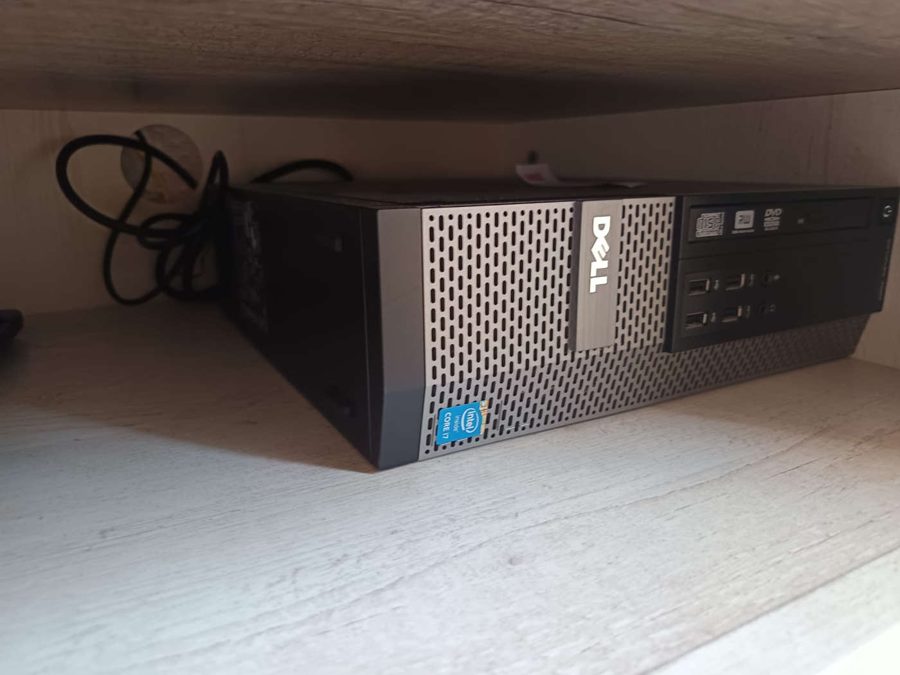
Behind any local AI service, infrastructure is needed to support it. A reused PC (Dell OptiPlex, Intel i7-4790, 16GB RAM, 436GB SSD) runs Ubuntu Server without a graphical interface, with each service isolated in its own Docker container: if one fails, the rest keeps running.
Deployed services — click each one to see the details:
Secure remote access to the entire network without exposing ports, with access control and audit logs.
DNS propio de la red doméstica: bloqueo de publicidad y dominios maliciosos, nombres locales fáciles de recordar.
Self-hosted alternative to Google Photos, with mobile synchronization and local machine learning.
Brute-force intrusion prevention: detects failed login patterns and automatically bans the IP.
Visual monitoring of services, TCP ports and containers, with alerts for incidents.
Real-time visibility into CPU, memory, disk and network — identifies bottlenecks instantly.
Low-code automation orchestrator, a free self-hosted alternative to Zapier.
The goal is to demonstrate that, with consumer hardware, it is possible to have professional-grade AI workflows with minimal latency and full control over the models — without any data leaving the local network. The stack runs on Ollama as the inference engine and Open WebUI as the interface, all in Docker containers.
| Device | Izan's Personal PC |
|---|---|
| CPU | Intel i5-13600KF |
| RAM | 2 × 8GB Kingston Fury 3200MHz |
| GPU | Zotac NVIDIA RTX 4060 Ti — 16GB VRAM |
| Disco | 1TB NVMe M.2 Kingston |
| Performance | 12–18 tokens/s con modelos de hasta 24B |
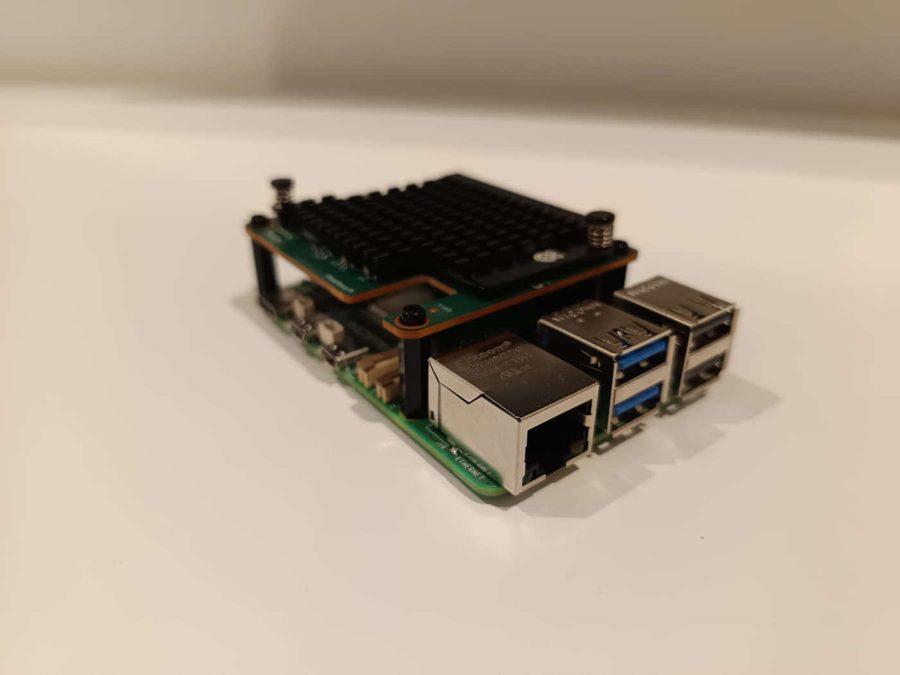
An 8GB Raspberry Pi 5 with the AI HAT+2 module (Hailo-8 NPU, 26 TOPS) runs a pipeline in Python with OpenCV and the Hailo API capable of describing video content: in a real-world environment this translates into detecting workplace hazards, smoke or objects without human intervention, and automatically triggering protocols or notifications.
At the opposite end of the spectrum from the Raspberry Pi are NVIDIA's two platforms: the Spark, designed for large-scale training and inference, and the Jetson Orin Nano, focused on Edge AI and robotics with agents that act on sensors in real time.
Blackwell architecture in a personal supercomputer form factor, tested through remote access to a virtual machine.
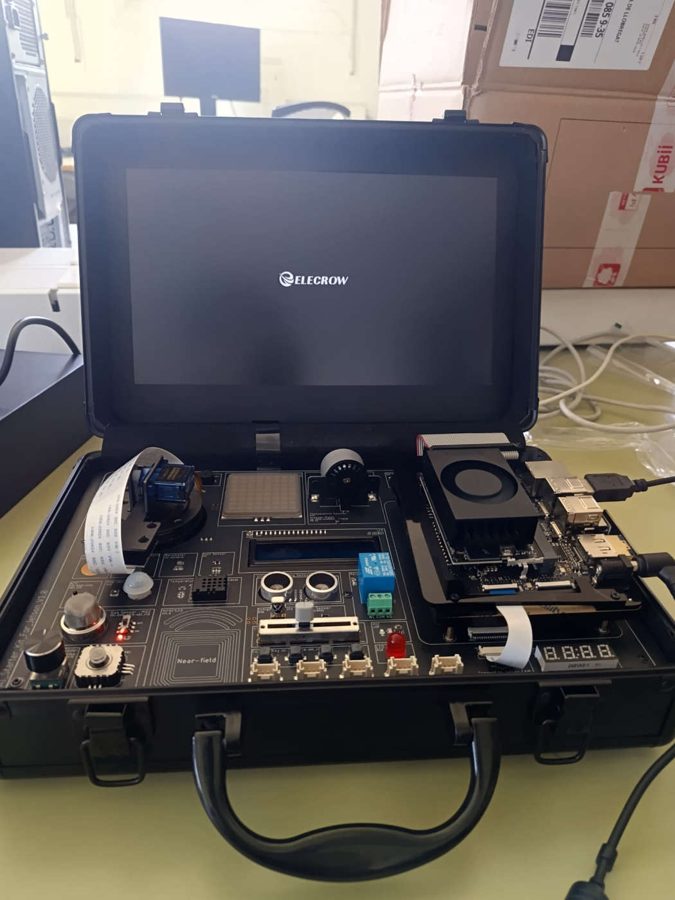
Using a development kit with sensors, actuators and an integrated display, we tested how an AI agent can read sensor data and act accordingly and autonomously — the foundation of any robotics or industrial IoT application.
Four platforms, four different purposes. None excels at everything — each has its place depending on the use case.
| RTX 4060 Ti 16GB | Raspberry Pi + HAT2+ | NVIDIA Spark | Jetson Orin Nano | |
|---|---|---|---|---|
| Architecture | Ada Lovelace | ARM Cortex-A76 + NPU Hailo-8 | Blackwell | Ampere |
| Memory | 16GB GDDR6 | 8GB LPDDR4 + 26 TOPS NPU | 48–128GB | 8GB compartida |
| Power consumption (TDP) | 165W | 5–12W | 100–240W | 7–15W |
| Typical use | IA local (hasta 24B), gaming | Edge AI, visión artificial, IoT | Entrenamiento, modelos de 70B–400B | Edge AI, robótica |
| Advantage | Low cost, low latency | Ultra-low power consumption, portable | Scalability, large memory | JetPack ecosystem, real-time |
| Limitation | Insufficient VRAM for large models | Not suitable for large models | Cost, power consumption, complexity | Limited shared memory (8GB) |
Estimated annual cost per platform, based on the power consumption measured in the project.
The complete technical report covers every installation, configuration and testing step for the 5 project blocks.